To understand Argentina, you do not go to a government building. You do not go to a museum, nor do you sit in a quiet tango cafe. You go to a stadium. You go to a barrio (neighborhood) where children are playing on a dusty patch of land. You go to a bar where a grainy television is showing a match, and you watch as grown men and women cry, scream, embrace, and sink into despair, all within the span of 90 minutes.
In Argentina, sport is not a pastime. It is not “mere entertainment.” It is a language, a religion, and the primary, pulsating artery of the national identity.
While the nation is famously defined by a trinity of passions—tango, politics, and football—it is the latter that has consumed all else. Tango is a beautiful, melancholic memory; politics is a source of constant, cynical division. But football? Football is the present. It is the social glue, the national debate, and the stage upon which the country’s greatest triumphs and most bitter tragedies are played out.
To understand Argentina, you must understand its relationship with the ball. You must understand the mythology of its gods, the sacredness of its rivalries, and the sheer, unadulterated passion that fuels it all. This is not a story about games; it’s a story about a nation’s search for itself, played out on grass, clay, and hardwood.
Part 1: The One True Religion
Everything else in Argentine sport exists in the shadow of football. It is the sun around which all other athletic planets orbit. It is the language of the people, from the poorest villa (slum) in Buenos Aires to the most exclusive gated community.
The Potrero: The Cradle of Argentine Genius
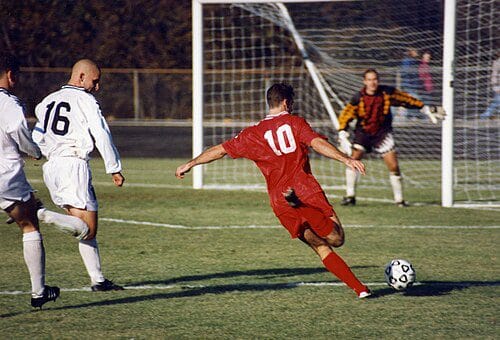
You cannot comprehend Argentine football without first understanding the potrero. The potrero is the informal, often dusty, uneven, and chaotic patch of land where the game is first learned. It is the street, the vacant lot, the neighborhood park.
Unlike the rigid, systematic academies of Europe, the potrero teaches a different game. It is a game of survival, creativity, and cunning. Here, the ball is everything, and the only way to succeed is through individual brilliance. This is the birthplace of the gambeta—the dribble, the feint, the deceptive body movement designed to humiliate an opponent. It is also the birthplace of viveza criolla, or “creole cunning,” a form of street smarts that prizes winning, sometimes through cleverness that borders on deception.
The Argentine style, known as La Nuestra (“Our Way”), was born here. It is a style that values artistry and individual expression over the “boring” efficiency of tactical systems. It is the belief that the game should be a dance, a spectacle, a display of genius—not just a pursuit of a result.
The Two Gods: Maradona and Messi
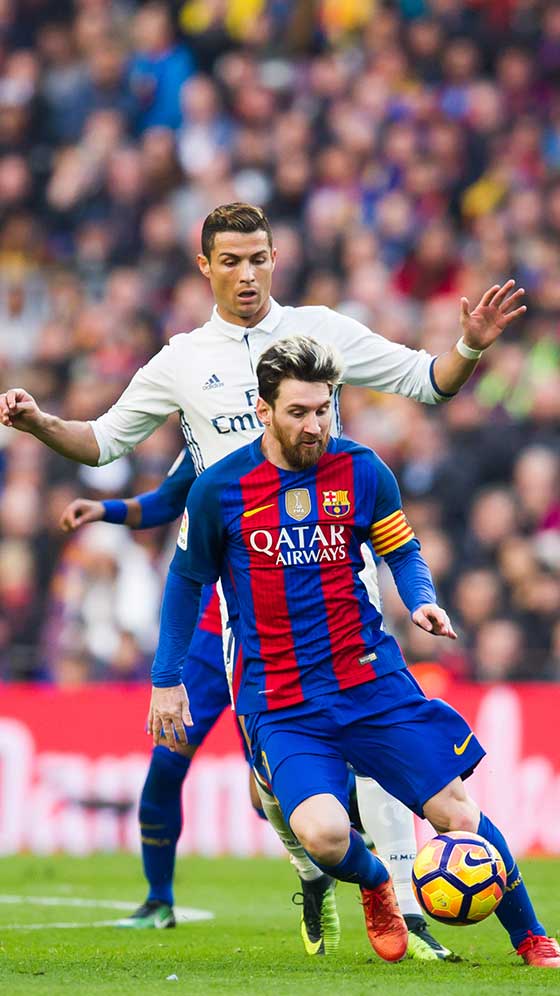
To understand the Argentine soul, you must understand its two footballing gods. They are not just players; they are the two faces of the nation’s identity, its two contradictory testaments.
Diego Maradona: The Flawed, Passionate, “Human” God Diego Armando Maradona is, for many, the ultimate expression of Argentina. He was a pibe de oro (golden boy) who sprung directly from the potrero of Villa Fiorito, one of the poorest slums. He was short, powerful, rebellious, and possessed a left foot that seemed to be controlled by a divine hand.
Maradona is Argentina’s id. He is pure, unadulterated passion, chaos, and defiance. His crowning moment was not just winning the 1986 World Cup; it was the quarter-final match against England. That single game is a perfect microcosm of viveza and genius.

- The “Hand of God”: Maradona scored a goal by punching the ball into the net with his fist. It was illegal, but it was the ultimate act of viveza. He later said it was “a little with the head of Maradona, and a little with the hand of God.”
- The “Goal of the Century”: Just four minutes later, he silenced all debate by scoring the greatest goal in history, dribbling past half the English team.
For Argentina, this match was not just football. It was divine revenge. It came just four years after the Falklands/Malvinas War, a humiliating military defeat at the hands of the British. Where their soldiers had failed, their “golden boy” succeeded, defeating the English first with cunning (the cheat) and then with pure, undeniable genius (the goal).
Maradona was a god because he was human. He was flawed, he battled addiction, he fought with the powerful, and he was always, unapologetically, himself. He was the god of the common people.
Lionel Messi: The Perfect, Infallible, “Global” God Lionel Messi is the opposite. He is quiet, humble, and relentlessly consistent. For years, this was a problem for Argentina. Messi left for Barcelona’s La Masia academy as a child. He didn’t grow up in the potrero. He was seen as “too European,” too polished, too detached. He was a god, yes, but he was a global god, not their god.

His genius was never in doubt, but his “Argentine-ness” was. He was criticized for not singing the national anthem, for failing to show Maradonian passion, and for his repeated, heartbreaking failures with the national team.
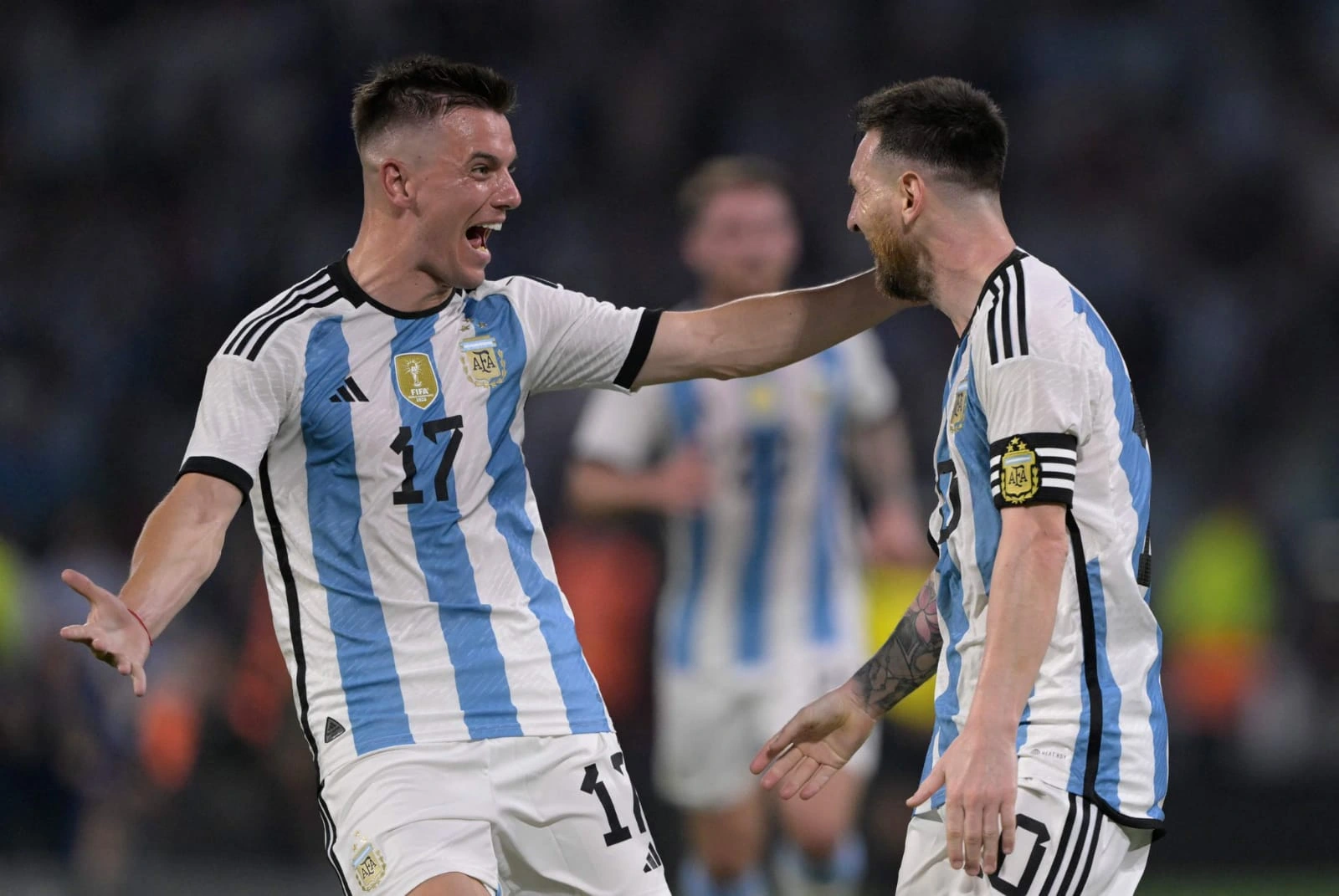
Messi’s story, therefore, became one of redemption. It was a 15-year struggle to win the love of his own people. The turning point was the 2021 Copa América, where he finally won a major trophy, visibly weeping on the field. But the coronation was the 2022 World Cup in Qatar.
In that tournament, Messi became Maradona. He was no longer just a quiet genius. He was a leader. He was combative (famously taunting the Dutch team: “What are you looking at, bobo?”), he was passionate, and he carried the team on his back in a way that was undeniably Argentine. When he lifted the trophy, it was the final unification. Argentina no longer had to choose. They had two gods: Maradona, the god of chaotic passion, and Messi, the god of perfected, resilient genius.
The Superclasico: A Nation at War
You cannot speak of Argentine football without speaking of Boca Juniors vs. River Plate. This is not just a rivalry; it is the Superclásico. It is an event that paralyzes the nation.
Its roots are in social class.
- River Plate (Los Millonarios – “The Millionaires”): Founded in the same working-class La Boca neighborhood as their rivals, they soon moved to the affluent northern district of Núñez. They became the team of the middle and upper classes, known for a style of elegance and beautiful, flowing football.
- Boca Juniors (Xeneizes – “The Genoese”): They stayed in La Boca, the gritty, working-class port neighborhood. They became the team of the people, la mitad más uno (“half plus one”), priding themselves on garra (grit) and passion over pure aesthetics.
When these two teams play, it is a clash of identities, classes, and philosophies. The atmosphere at Boca’s stadium, La Bombonera (“The Chocolate Box”), is famously said to “not tremble, but beat” like a heart. The air is thick with smoke, confetti (papelitos), and a wall of sound so intense it is physically intimidating. It is the single greatest spectacle in all of club football.
Part 2: The Shadow of Passion – The Barra Bravas
This unbridled passion has a dark and dangerous side. Argentine football is inseparable from the Barra Bravas, the organized, often-violent supporter groups. These are not simply “hooligans” or passionate fans. They are a powerful, entrenched institution.
The Barras control vast swaths of the stadium experience. They get free tickets from the club, which they sell. They control parking and food concessions. They are deeply, politically intertwined with the clubs’ directors and, in many cases, national politicians, who use them for muscle at rallies.
Their influence is so great they have been known to threaten players, demand “bonuses” from the squad, and even influence transfer decisions. The violence between rival Barras became so extreme that, for several years, away fans were completely banned from all matches in the Argentine league to prevent riots and deaths.
This is the central contradiction of Argentine football: the same passion that creates the most beautiful, electric atmosphere on Earth is also the source of its corruption and violence. It is a passion that is so strong, it often consumes itself.
Part 3: The Other Gods – Argentina’s Second Pantheon
While football is the sun, it is not the only light in the sky. Argentina has produced world-beating legends in a variety of other sports, each reflecting a different facet of the national character.
Basketball: The Golden Generation
For two decades, Argentine basketball was defined by one team: The Golden Generation. Their story is another “underdog” miracle.
Led by Manu Ginóbili—a player as creative and unconventional in his sport as Maradona was in his—this team played with a style that was pure Argentina: selfless, passionate, and incredibly high-IQ.
Their crowning achievement was the 2004 Athens Olympics. In the semi-finals, they did the unthinkable: they defeated the United States “Dream Team,” which was stacked with NBA superstars. It was the first time a U.S. team with NBA players had failed to win gold. They then went on to win the gold medal. For a nation obsessed with football, this basketball team became national heroes, proving that Argentine passion and teamwork could conquer the world on any court.
Tennis: The Kings of Clay and Grit
Argentine tennis is defined by grit. The nation’s players are known as baseline warriors, masters of the slow, grueling red clay.
- Guillermo Vilas: In the 1970s, Vilas, “The Bull of the Pampas,” was a rockstar. With his long hair, poetic soul, and punishing topspin forehand, he single-handedly popularized the sport, winning four Grand Slams and putting Argentina on the tennis map.
- Gabriela Sabatini: In the 80s and 90s, she was the icon of grace and style, a top-10 mainstay and US Open champion.
- Juan Martín del Potro: The modern hero. A gentle giant with a thunderous, “Thor’s hammer” forehand. His career was a tragic story of injuries and comebacks. But his legacy was cemented in 2016 when he led Argentina to its first-ever Davis Cup title, winning an epic, five-set final against Croatia after being two sets down, all while playing with a broken finger. It was a display of pure, heroic garra.
Rugby: The Passion of Los Pumas
In a nation defined by football, rugby was historically the domain of the upper-middle class and private schools. But the national team, Los Pumas, plays with a passion that is 100% Argentine.
Lacking the funding and domestic professional league of their rivals, Los Pumas have consistently punched above their weight. Their identity is one of raw, emotional, almost primal scrummaging and desperate defense. Their breakout moment was the 2007 World Cup, where they shocked the world to finish in third place. They are a team that plays, quite literally, with huevo (eggs, a slang for guts/courage), and the nation loves them for it.
Polo: The Undisputed Dominance
At the complete opposite end of the social spectrum is polo. This is the sport of the estancias (ranches) and the aristocracy. And in polo, Argentina is not just good; it is completely and utterly dominant.
The 10 best players in the world are almost always Argentine. The world’s most important tournament, the Argentine Open, is played in Palermo, Buenos Aires. Their dominance comes from a unique combination of generational knowledge, access to the best land, and, most importantly, the world’s best horse breeding and cloning programs. Players like Adolfo Cambiaso are legends in their sport, demonstrating a level of skill that is, in its own way, as breathtaking as Messi’s.
Auto Racing: The Original Hero
Before Maradona, before Messi, there was Juan Manuel Fangio. In the 1950s, “El Maestro” was the first global Argentine superstar. He won five Formula One World Championships, a record that stood for nearly 50 years. Fangio was the original standard-bearer, a quiet, brilliant master of his craft who proved that Argentina could produce the very best.
Conclusion: The Unifying Scream
To look at sports in Argentina is to look at a nation of contradictions. It is a country of immense talent and systemic dysfunction. It is a people capable of transcendent genius and self-destructive chaos.
All of these contradictions are visible in their sports. You see the viveza of the potrero, the passionate violence of the barra bravas, the aristocratic perfection of polo, the gritty resilience of del Potro, and the collective heart of the Golden Generation.
And then, you see football.
When Argentina won the World Cup in 2022, an estimated five million people flooded the streets of Buenos Aires for the victory parade. It was one of the largest public gatherings in human history. For that one day, a nation fractured by crippling inflation, political division, and endless cynicism was united. It was united in a single, joyous, primal scream.
That is the power of sport in Argentina. It is not an escape from reality. It is the place where reality is forged, felt, and, for one brief, glorious moment, perfected.
Share this content: