Why do we watch?
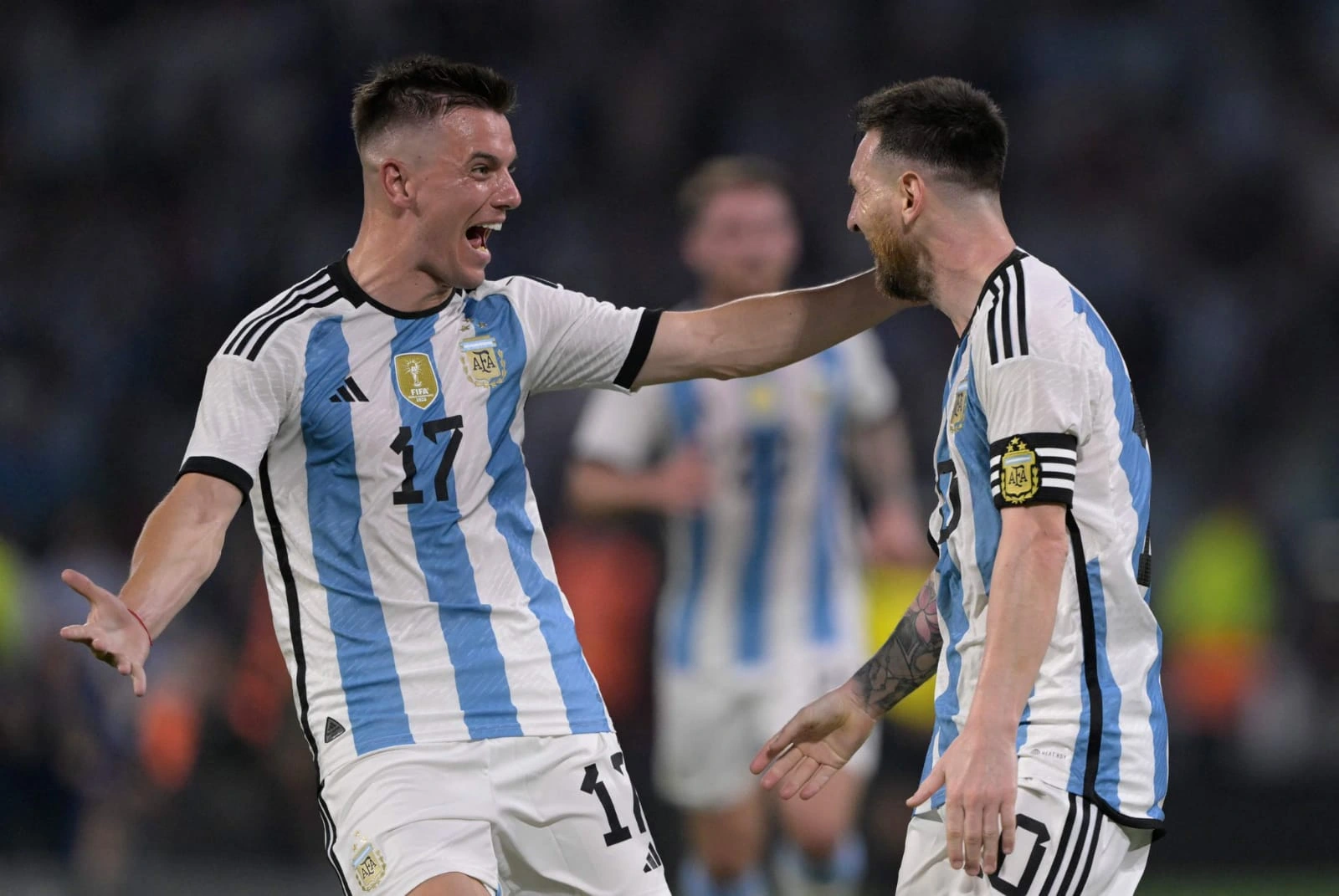
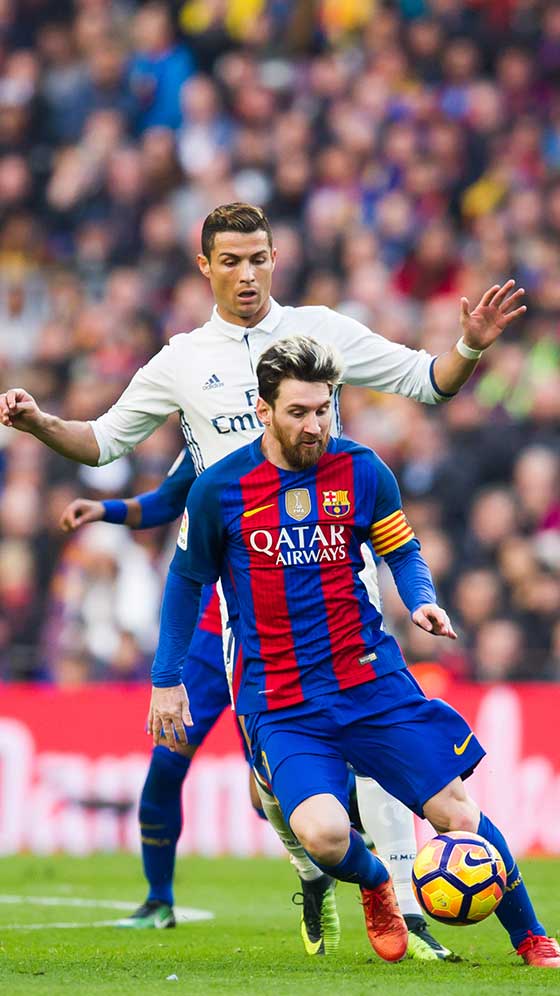
It’s a simple question with a complex answer. We watch sports for the brilliance, the artistry of a perfectly executed play, the display of human potential pushed to its absolute limits. We watch to see the giants, the dynamos, the Goliaths—the Federers, the Jordans, the Messis—perform at a level we can barely comprehend.
But there is another, more potent, and perhaps more profound reason we watch. We watch for the flaw in the matrix. We watch for the day the script is torn up. We watch for the moment the giant stumbles, the titan falls, and the impossible, improbable, infinitesimal chance becomes a reality.
We watch for the underdog.
The “underdog story” is the single most powerful narrative in the human arsenal. It is David versus Goliath, written in sweat, grass stains, and tears. It is the core of our modern mythology. Why? Because in our own lives, we so often feel like the underdog. We face our own “Goliaths”—be it a corporate ladder, a personal struggle, a systemic injustice, or just the overwhelming odds of life itself.
When an overlooked, underfunded, and utterly dismissed team or individual defies all logic, all statistics, and all reason to achieve victory, they do more than just win a game. They validate our most desperate hope: that the little guy can win. That effort can triumph over resources. That belief can shatter destiny.
These are not just sports moments; they are cultural touchstones, seismic shocks that ripple far beyond the stadium. To understand why sports matter, we must dissect these miracles. Let us explore the greatest fairy tales ever told, not just what happened, but how they happened, and what they truly mean.
Chapter 1: The 5000-to-1 Season – The Miracle of Leicester City
The Goliath: The English Premier League. This isn’t just a sports league; it’s a global financial aristocracy. At the top sit the “Big Six“—Manchester United, Manchester City, Chelsea, Liverpool, Arsenal, and Tottenham. They possess near-limitless wealth, stadiums like fortresses, global fanbases, and squads assembled for hundreds of millions of pounds.
The David: Leicester City Football Club. In 2014, they were a newly-promoted team. In the 2014-15 season, they were mathematically relegated for 140 days, sitting at the absolute bottom of the table before pulling off a miraculous “great escape” to survive on the final day. They were nobodies. Their reward for this survival was to fire their manager and hire Claudio Ranieri, a man kindly described as a “journeyman” and who had just been embarrassingly fired from the Greek national team after losing to the Faroe Islands.
The Odds: Before the 2015-16 season, the betting odds for Leicester City to win the Premier League were 5000-to-1. What does that mean? It means bookmakers believed it was more likely that Elvis Presley would be found alive (2000-to-1) or that Kim Kardashian would become President of the United States (2000-to-1). It was not a possibility. It was a joke.
How the Miracle Happened: A single upset can be a fluke. A cup run can be lucky. A 38-game league season, however, is a war of attrition. It cannot be a fluke. So how?
It was a perfect storm of chemistry, tactics, and belief.
- The “Misfits”: Their squad was a collection of rejects. Jamie Vardy, their star striker, was playing non-league football just a few years prior and working in a factory. Riyad Mahrez was bought for a paltry £400,000 from the French second division. N’Golo Kanté was a complete unknown from France, a tiny, tireless midfielder who, as the joke went, “covered 30% of the Earth’s surface.”
- The Tactics: While the “Goliaths” obsessed over “tiki-taka” possession football, Ranieri implemented a brilliantly simple, devastatingly effective counter-attacking style. They would absorb pressure, let the other team have the ball, and then, upon winning it, unleash the lightning speed of Vardy and Mahrez. They were a tactical throwback, a coiled spring that struck again and again.
- The Belief: Ranieri, the gentle “Tinkerman,” was the perfect antidote to the high-strung, ego-driven league. He was a father figure. He famously motivated his team by promising them pizza if they kept a clean sheet (which took them months to finally do). He kept the pressure off, framing their entire season as a dream. “Forty points,” he said, “our goal is 40 points to avoid relegation.” They hit 40 points by Christmas.
- The Collapse of the Giants: It was also a power vacuum. The traditional giants faltered. Chelsea, the defending champions, collapsed. Manchester United was in transition. Arsenal, as ever, was inconsistent. Leicester didn’t just get good; they got good at the perfect time.
The Climax: The world watched, waiting for the “bubble” to burst. It never did. They just kept winning. 1-0 here, 2-1 there. The defining moment came not from their own game, but on a Monday night. Tottenham, their last remaining challenger, had to beat Chelsea. They went up 2-0. It looked over. But in the “Battle of the Bridge,” Chelsea clawed back a 2-2 draw.
The Leicester City players, gathered at Jamie Vardy’s house for a party, watched as the final whistle blew. The video that leaked from that party is pure, unadulterated ecstasy. It was the moment the 5000-to-1 shot came home.
The Legacy: Leicester’s win is arguably the single greatest achievement in the history of team sports. It shattered the illusion of a closed shop. It proved that a team, a true team, with tactical clarity, unbreakable spirit, and a little bit of magic, could defeat a system built on pure financial disparity. It gave every fan of every small club a new, dangerous, and beautiful word: “Hope.”
Chapter 2: The Miracle on Ice – The Game That Stopped a War
The Goliath: The Soviet Union National Ice Hockey Team. The “Red Army.” This was not just a hockey team. It was a symbol of Soviet supremacy. They were state-sponsored professionals masquerading as “amateurs” in an Olympic system built for them. They had won the previous four Olympic gold medals. They were a machine, a dynasty that had dominated world hockey for two decades. Just weeks before the 1980 Olympics, they had humiliated the NHL All-Star team. In a final exhibition game, they routed the young U.S. team 10-3.
The David: A “ragtag” (as the media loved to call them) group of American college kids and amateurs. The average age was 21, the youngest team in U.S. Olympic history. They were assembled by coach Herb Brooks, a brilliant, demanding, and almost tyrannical motivator who saw something no one else did.
The Context (The “Why” It Mattered): You cannot understand this game without understanding 1980. This was the absolute peak of the Cold War. The Soviet Union had just invaded Afghanistan. The U.S. was in a deep “crisis of confidence”—struggling with economic stagflation, gas shortages, and the Iran hostage crisis. America felt weak, and the Soviet Union looked invincible. This hockey game was not a hockey game. It was a proxy war. It was the failing, free-wheeling West versus the disciplined, monolithic East.
How the Miracle Happened:
- The Coach: Herb Brooks was a psychological genius. He broke the team down, running them in brutal, non-stop drills (known as “Herbies”) until they were vomiting on the ice. He forced them to hate him, so they would learn to love each other. He famously cut the last player just before the Olympics, keeping his team on edge, fostering a desperate hunger.
- The Strategy: Brooks knew they couldn’t out-muscle or out-skill the Soviets. They had to out-skate them. He drilled them in a new, hybrid style of play—a fluid, European style of passing and speed, combined with American grit. He believed the Soviets, used to slower, methodical play, could be vulnerable to their own game played faster.
- The “Moment”: The game itself, at Lake Placid, New York. The Soviets, as expected, dominated early. But the U.S. kids just… wouldn’t… break. Goalie Jim Craig played the game of his life. Every time the Soviets scored, the U.S. clawed back. They were tied 2-2. They went down 3-2. They tied it 3-3.
Then, with 10 minutes left in the third period, U.S. captain Mike Eruzione, a player almost no one expected to even make the team, found the puck. He fired a wrist shot. It beat the Soviet goalie. 4-3.
The final 10 minutes were the longest in sports history. The Red Army unleashed a furious, desperate barrage. The U.S. kids—tired, battered, terrified—threw their bodies in front of every shot. The clock ticked down. 10 seconds… 5 seconds… The crowd was in a state of primal, hysterical disbelief.
As the final buzzer sounded, broadcaster Al Michaels, himself struggling to comprehend what he was seeing, uttered the most famous line in sports history: “Do you believe in miracles?! YES!”
The Legacy: The “Miracle on Ice” transcended sport. It was a cultural, political, and emotional explosion. The U.S. would go on to beat Finland to actually win the gold medal, but it was the game against the Soviets that mattered. It was a badly-needed jolt of national pride, a feeling that, just maybe, the “invincible” empire wasn’t so invincible after all. It was David, on ice skates, felling Goliath with a hockey puck.
Chapter 3: The Pirate Kings – Greece’s Stubborn Conquest of Euro 2004
The Goliath: The European football elite. The UEFA European Championship is, pound-for-pound, arguably a tougher tournament to win than the World Cup. In 2004, the field was stacked. You had France, the reigning champions, led by the god-like Zinedine Zidane. You had the Czech Republic in their golden generation. You had England with Beckham, Gerrard, and a young Wayne Rooney. And you had Portugal, the hosts, with a golden generation of their own, led by Luis Figo and a prodigy named Cristiano Ronaldo.
The David: The Greek National Team. To call them underdogs is an understatement. They were a non-entity. Their odds were 150-to-1. In their entire history, they had qualified for only two major tournaments (Euro 1980, World Cup 1994) and in those tournaments, they had not won a single game. They were there to make up the numbers.
How the Miracle Happened:
- The “Anti-Fairy Tale”: If Leicester was a story of joyful, attacking magic, Greece was the opposite. This was a fairy tale written by the Brothers Grimm—it was dark, cynical, and brutal. Their German coach, the legendary “King” Otto Rehhagel, knew his team had no world-class attackers. But he knew he could teach them not to lose.
- The Strategy: “Grecian” Defense: Rehhagel implemented a rigid, ultra-defensive, man-marking system. The strategy was simple: be more organized, more disciplined, and more stubborn than everyone else. Frustrate the artists. Foul them. Out-work them.
- The “Moment” (The Tournament): They shocked the world by beating the hosts, Portugal, in the very first game. A fluke, everyone said. They scraped a draw with Spain. They lost to Russia but advanced from the group on a tie-breaker.
- In the Quarter-Finals, they faced the reigning champions, France. They frustrated Zidane for 90 minutes. They got one good chance. Angelos Charisteas scored. 1-0, Greece.
- In the Semi-Finals, they faced the high-flying, unstoppable Czech Republic. They frustrated them for 90 minutes. The game went to “silver goal” extra time. In the 105th minute, they got one corner kick. Traianos Dellas scored. 1-0, Greece.
- In the Final, they once again faced the hosts, Portugal. The entire nation of Portugal, and Ronaldo, was ready for revenge. The script was written for a home-team triumph. Greece didn’t care. They defended. They frustrated. And in the 57th minute, from a corner kick, Angelos Charisteas scored. 1-0, Greece.
They had won the entire tournament by being the most boring, pragmatic, and organized team. They had not played “beautiful” football. They had simply won.
The Legacy: Greece 2004 is a divisive miracle. Many called it “anti-football.” But it was a triumph of tactics over talent, of collective will over individual brilliance. It proved that you don’t have to be the best, the prettiest, or the most artistic. You just have to be the hardest to beat. It was a victory for the pragmatists, a testament to the fact that an iron-clad defense and an unbreakable team spirit can, in fact, conquer the world.

The Psychology of the Upset: Why We Need the Underdog
These stories are more than just historical anomalies. They are fundamental to our love of sports. They reveal deep psychological truths.
1. The “Nothing to Lose” Phenomenon: The single greatest weapon the underdog possesses is a lack of pressure. When Leicester City played, the expectation was failure. When Greece played, they were expected to be on a plane home. This creates a psychological freedom. They can play loosely, bravely, while the “Goliath” in front of them is crippled by the fear of embarrassment. The favorite plays not to lose; the underdog plays to win.
2. The Arrogance of Goliath: The giant often defeats himself. Mike Tyson, 42-to-1 favorite, barely trained for his fight against Buster Douglas in 1990, seeing him as a mere stepping stone. The Soviet Red Army, after that 10-3 exhibition win, likely viewed the U.S. kids as a bye. Overconfidence breeds complacency, and complacency is the crack in the armor that the underdog’s hammer, swung with pure desperation, can shatter.
3. The Power of Collective Belief: In a team setting, belief is a tangible force. When a group of players truly believes in their system and in each other, they perform above their individual talents. Ranieri convinced his “misfits” they were world-beaters. Herb Brooks convinced his “kids” they were the equals of the Red Army. Rehhagel convinced his “nobodies” they were an unbreakable wall. This collective “flow state” is the X-factor that no statistic can ever measure.
4. It is Our Story: Ultimately, we root for the underdog because we are the underdog. We see in their impossible struggle our own daily battles. We are all, in some way, the 5000-to-1 shot. And when they win, a part of us wins, too. Their victory is a beacon. It’s a shot of pure, uncut hope that tells us that no matter how big the giant, how long the odds, or how much the world has written you off… the script is not finished.
Conclusion: The Unwritten Game
We will continue to watch sports to see the Goliaths. We will marvel at their power and their grace. But we will live for the Davids.
We will wait, patiently, through the predictable seasons, the boring blowouts, and the foregone conclusions, all for that one moment. The moment the stadium goes silent in shock. The moment the commentator’s voice cracks with disbelief. The moment we all, collectively, get to witness a fairy tale written in real-time.
These are the moments that cement our love for the game. They are the artifacts of hope, the proof of the impossible. They remind us that the greatest drama is not in the predictable, but in the unwritten. And in sports, as in life, the game is never over until the final whistle blows.
Share this content: